
A computer network is a set of computers sharing resources located on or provided by network nodes. The computers use common communication protocols over digital interconnections to communicate with each other. These interconnections are made up of telecommunication network technologies, based on physically wired, optical, and wireless radio-frequency methods that may be arranged in a variety of network topologies.
The nodes of a computer network can include personal computers, servers, networking hardware, or other specialised or general-purpose hosts. They are identified by network addresses, and may have hostnames. Hostnames serve as memorable labels for the nodes, rarely changed after initial assignment. Network addresses serve for locating and identifying the nodes by communication protocols such as the Internet Protocol.
Computer networks may be classified by many criteria, including the transmission medium used to carry signals, bandwidth, communications protocols to organize network traffic, the network size, the topology, traffic control mechanism, and organizational intent.
Computer networks support many applications and services, such as access to the World Wide Web, digital video, digital audio, shared use of application and storage servers, printers, and fax machines, and use of email and instant messaging applications.
🔹 Personal Area Network (PAN)
🔹 Local Area Network (LAN)
🔹 Wide Area Network (WAN)
🔹 Wireless Local Area Network (WLAN)
🔹 Campus Area Network (CAN)
🔹 Metropolitan Area Network (MAN)
🔹 Storage Area Network (SAN)
🔹 System-Area Network (SAN)
Types of Computer Network
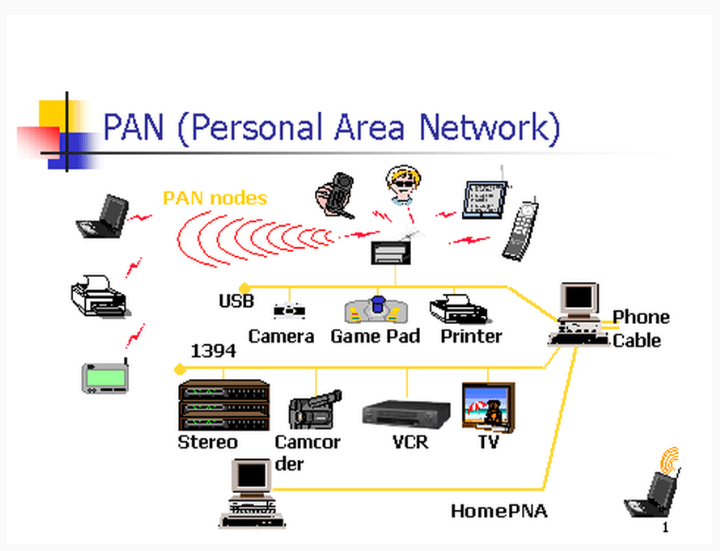
Personal Area Network (PAN)
A personal area network is a computer network for interconnecting electronic devices within an individual person’s workspace. A PAN provides data transmission among devices such as computers, smartphones, tablets and personal digital assistants.
Local Area Network (LAN)
A local area network is a computer network that interconnects computers within a limited area such as a residence, school, laboratory, university campus or office building. By contrast, a wide area network not only covers a larger geographic distance, but also generally involves leased telecommunication circuits
Wide Area Network (WAN)
A wide area network (WAN) is a telecommunications network that extends over a large geographic area. Wide area networks are often established with leased telecommunication circuits.
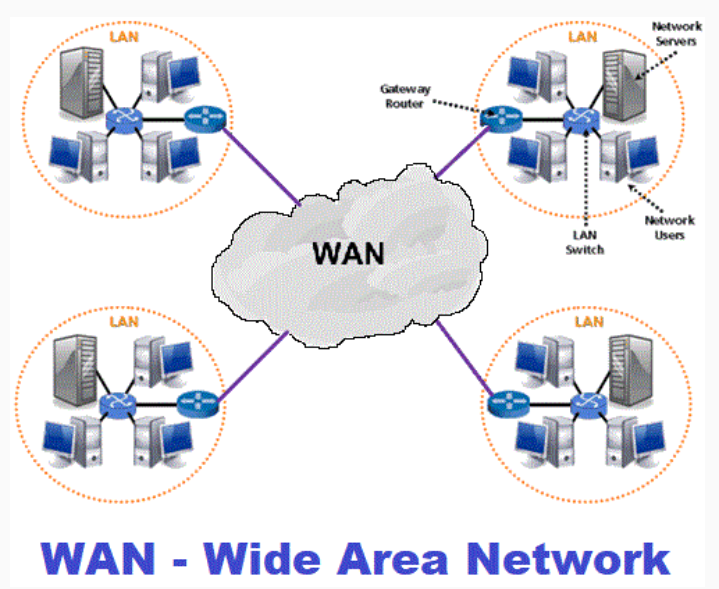
Businesses, as well as schools and government entities, use wide area networks to relay data to staff, students, clients, buyers and suppliers from various locations around the world. In essence, this mode of telecommunication allows a business to effectively carry out its daily function regardless of location. The Internet may be considered a WAN
Wireless Local Area Network (WLAN)
A wireless LAN (WLAN) is a wireless computer network that links two or more devices using wireless communication to form a local area network (LAN) within a limited area such as a home, school, computer laboratory, campus, or office building. This gives users the ability to move around within the area and remain connected to the network. Through a gateway, a WLAN can also provide a connection to the wider
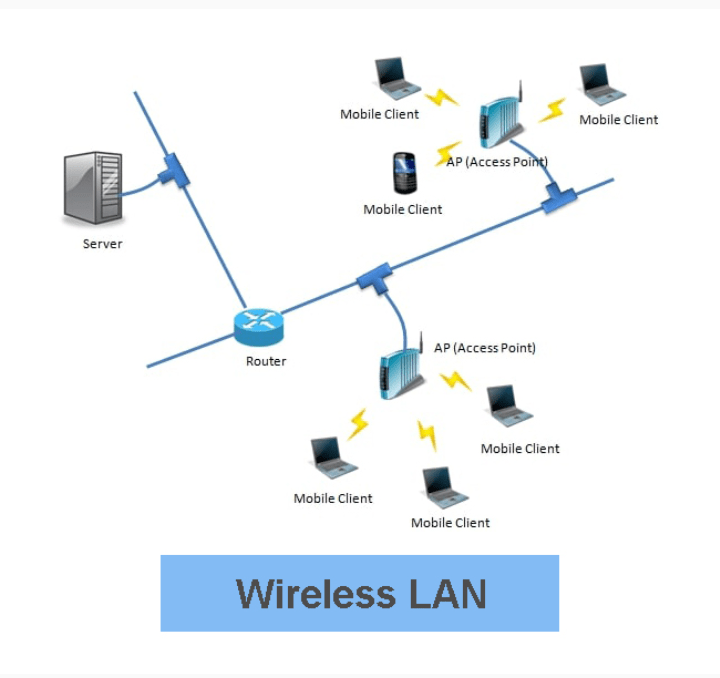
Wireless LANs based on the IEEE 802.11 standards are the most widely used computer networks in the world. These are commonly called Wi-Fi, which is a trademark belonging to the Wi-Fi Alliance. They are used for home and small office networks that link together laptop computers, printers, smartphones, Web TVs and gaming devices with a wireless router, which links them to the internet. Hotspots provided by routers at restaurants, coffee shops, hotels, libraries, and airports allow consumers to access the internet with portable wireless devices.
Campus Area Network (CAN)
A campus network, campus area network, corporate area network or CAN is a computer network made up of an interconnection of local area networks (LANs) within a limited geographical area.[1][2] The networking equipments (switches, routers) and transmission media (optical fiber, copper plant, Cat5 cabling etc.) are almost entirely owned by the campus tenant / owner: an enterprise, university, government etc.[3]
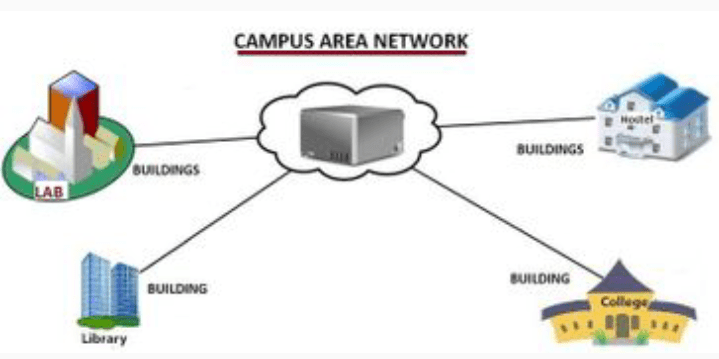
A campus area network is larger than a local area network but smaller than a metropolitan area network (MAN) or wide area network (WAN).
Metropolitan Area Network (MAN)
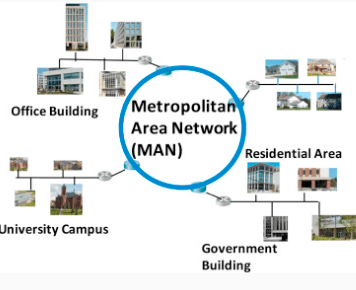
A metropolitan area network (MAN) is a computer network that interconnects users with computer resources in a geographic region of the size of a metropolitan area. The term MAN is applied to the interconnection of local area networks (LANs) in a city into a single larger network which may then also offer efficient connection to a wide area network. The term is also used to describe the interconnection of several local area networks in a metropolitan area through the use of point-to-point connections between them .
Storage Area Network (SAN)
A storage area network (SAN) or storage network is a computer network which provides access to consolidated, block-level data storage. SANs are primarily used to access data storage devices, such as disk arrays and tape libraries from servers so that the devices appear to the operating system as direct-attached storage. A SAN typically is a dedicated network of storage devices not accessible through the local area network (LAN).
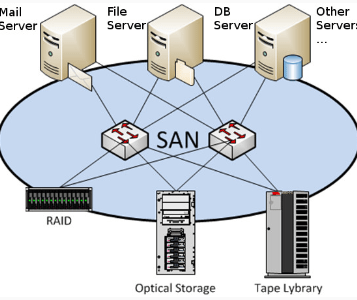
Although a SAN provides only block-level access, file systems built on top of SANs do provide file-level access and are known as shared-disk file systems.
Newer SAN configurations enable hybrid SAN[1] and allow traditional block storage that appears as local storage but also object storage for web services through APIs.
System-Area Network (SAN)
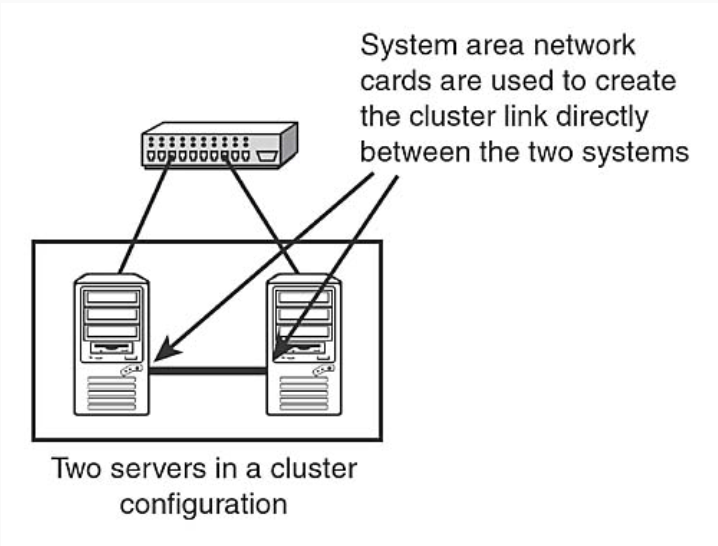
System area networks (SAN) are high-performance, connection-oriented networks that link computer clusters. Microsoft SQL Server 2005 uses it for high-performance connectivity through Virtual Interface Adapter (VIA).[1][2] This technology is used since the advent of Windows 2000.
Network Topology
The physical or geographic locations of network nodes and links generally have relatively little effect on a network, but the topology of interconnections of a network can significantly affect its throughput and reliability. With many technologies, such as bus or star networks, a single failure can cause the network to fail entirely. In general, the more interconnections there are, the more robust the network is; but the more expensive it is to install. Therefore most network diagrams are arranged by their network topology which is the map of logical interconnections of network hosts.
Bus topology
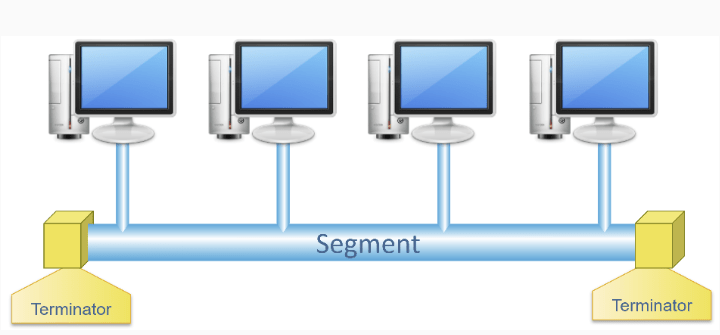
all nodes are connected to a common medium along this medium. This was the layout used in the original Ethernet, called 10BASE5 and 10BASE2. This is still a common topology on the data link layer, although modern physical layer variants use point-to-point links instead, forming a star or a tree.
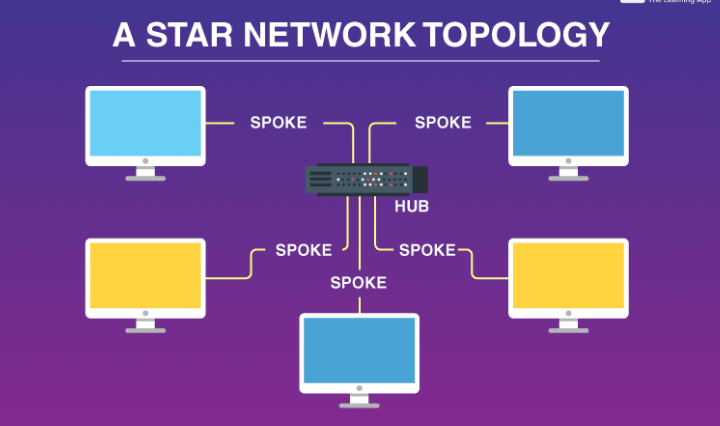
Star topology
Star network: all nodes are connected to a special central node. This is the typical layout found in a small switched Ethernet LAN, where each client connects to a central network switch, and logically in a wireless LAN, where each wireless client associates with the central wireless access point.
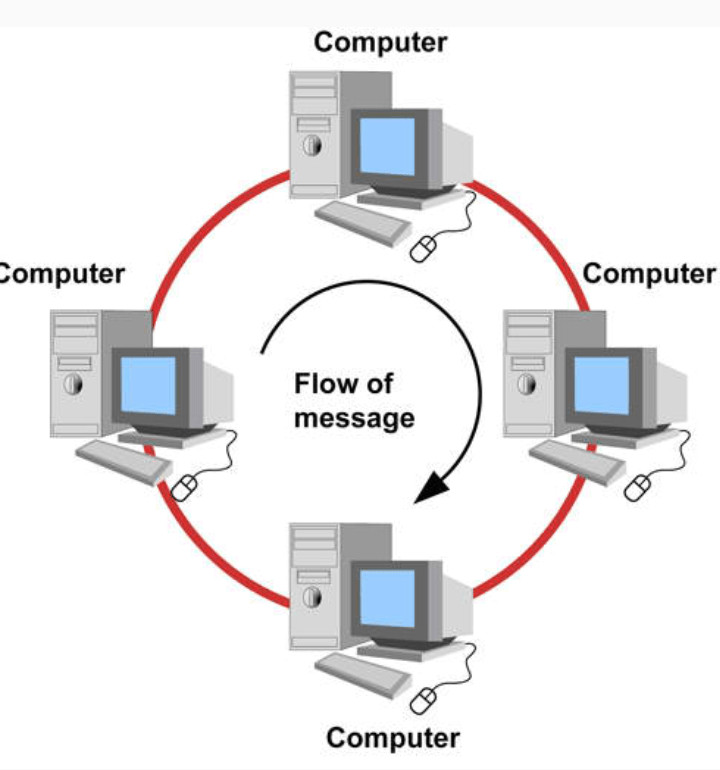
Ring topology
Ring network: each node is connected to its left and right neighbour node, such that all nodes are connected and that each node can reach each other node by traversing nodes left- or rightwards. Token ring networks, and the Fiber Distributed Data Interface (FDDI), made use of such a topology
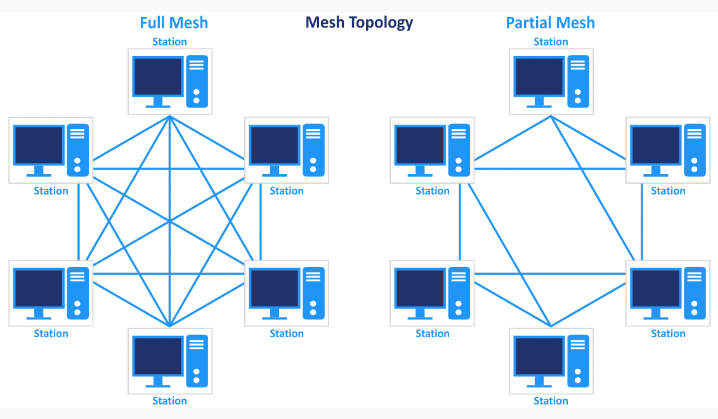
Mesh topology
A mesh network (or simply meshnet) is a local area network topology in which the infrastructure nodes (i.e. bridges, switches, and other infrastructure devices) connect directly, dynamically and non-hierarchically to as many other nodes as possible and cooperate with one another to efficiently route data to and from clients.
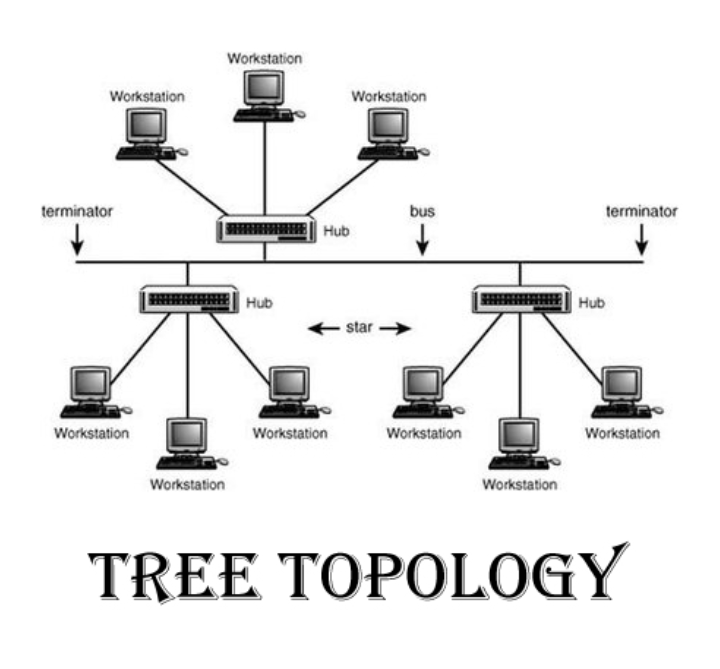
Tree topology
Tree network: nodes are arranged hierarchically. This is the natural topology for a larger Ethernet network with multiple switches and without redundant meshing.
The physical layout of the nodes in a network may not necessarily reflect the network topology. As an example, with FDDI, the network topology is a ring, but the physical topology is often a star, because all neighboring connections can be routed via a central physical location. Physical layout is not completely irrelevant, however, as common ducting and equipment locations can represent single points of failure due to issues like fires, power failures and flooding.
 Ayush Vishwakarma computer project